
solder mask applied in Smt pcba
Preventing component tombstoning during surface mount technology (SMT) printed circuit board assembly (PCBA) is a critical consideration for manufacturers seeking to ensure the reliability and integrity of their electronic products. Tombstoning occurs when a surface mount component becomes partially or completely lifted from one of its solder pads during the reflow soldering process, resulting in a vertical stance resembling a tombstone. This defect can compromise electrical connectivity, impair functionality, and undermine the overall quality of the assembly. To mitigate the risk of tombstoning, manufacturers employ various techniques and best practices throughout the assembly process.
One of the primary strategies for preventing component tombstoning is to optimize the design of the PCB layout and component placement. Proper component placement involves ensuring that components are symmetrically positioned with respect to their solder pads and that there is sufficient solder paste deposition on each pad. Additionally, minimizing the distance between the component and its associated solder pads reduces the likelihood of tombstoning by promoting balanced wetting forces during reflow soldering, thereby enhancing solder joint formation and reliability.
Furthermore, ensuring uniform solder paste deposition across the smt pcba surface is essential for preventing component tombstoning. Discrepancies in solder paste volume or stencil aperture design can lead to uneven wetting forces during reflow soldering, resulting in imbalanced solder joint formation and increased susceptibility to tombstoning. Employing advanced stencil printing techniques, such as laser-cut stencils or nano-coated stencils, can help optimize solder paste transfer efficiency and consistency, thereby reducing the risk of tombstoning defects.
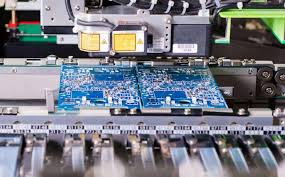
How is solder mask applied in Smt pcba?
Additionally, controlling process parameters during reflow soldering plays a crucial role in preventing component tombstoning. Fine-tuning reflow oven temperature profiles, conveyor speed, and atmosphere conditions can help ensure uniform heating and cooling of the PCB assembly, minimizing thermal gradients and thermal stresses that contribute to tombstoning. Implementing nitrogen reflow or vapor phase soldering processes can also improve solder wetting and reduce the incidence of tombstoning by mitigating oxidation and promoting flux activation.
Moreover, incorporating specialized solder paste formulations and flux chemistries can enhance solder joint reliability and prevent tombstoning defects. Low-voiding solder pastes with optimized particle size distributions and flux activators help promote uniform solder wetting and reduce void formation, thereby improving solder joint strength and stability. Additionally, using no-clean fluxes with excellent wetting properties and minimal residue formation minimizes the risk of tombstoning-related issues, such as solder balling or insufficient wetting, while simplifying post-soldering cleaning processes.
Furthermore, leveraging advanced inspection and quality control techniques can help detect and rectify potential tombstoning defects early in the assembly process. Automated optical inspection (AOI) systems, X-ray inspection, and in-line solder paste inspection (SPI) equipment can identify solder joint anomalies, component misalignment, or solder paste deposition issues before they escalate into costly rework or repair scenarios. Implementing comprehensive process control measures and establishing clear acceptance criteria for solder joint quality ensure consistency and reliability in preventing tombstoning defects across production batches.
In conclusion, preventing component tombstoning during SMT PCBA requires a multifaceted approach encompassing design optimization, process control, material selection, and quality assurance measures. By implementing best practices throughout the assembly process and leveraging advanced technologies and methodologies, manufacturers can minimize the risk of tombstoning defects and deliver high-quality, reliable electronic products that meet the stringent demands of today’s industry standards and customer expectations.