
Electrical Properties of Rigid Flex Printed Circuit Boards
A printed circuit board (PCB) is the foundational element in a wide variety of electronic devices. Basically, it consists of a non-conductive plate with conductive traces on its surface, onto which various electronic components are mounted. The conductive traces allow for the necessary electrical connections between components, thus achieving desired functionality.
PCBs can be either rigid or flexible, and each type offers different properties that make it best suited for certain applications. For instance, rigid-flex circuit boards combine the best features of both rigid-flex printed circuit board: rigid stability and flexibility. Consequently, they can be easily installed in confined spaces where space is at a premium. In addition, the use of a flexible material like polyimide makes rigid-flex circuit boards durable and reliable. These properties also enable them to withstand harsh environments and environmental hazards such as humidity, radiation, and temperature fluctuations.
Rigid-flex circuit boards are a critical component in many modern devices such as mobile phones, wearables, and aerospace equipment. They offer a number of benefits including improved signal integrity and reduced EMI. They are able to fit into confined spaces as well as accommodate more complicated circuitry. They also reduce the number of connection points, which cuts down on the overall weight and size of a device. Additionally, they are able to withstand mechanical stress on solder joints and traces.
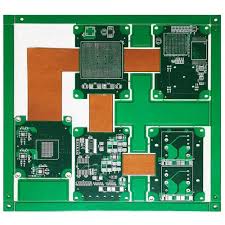
What Are the Electrical Properties of Rigid Flex Printed Circuit Boards?
The current carrying capabilities of rigid flex circuits are determined through a process known as “current rating nomograph.” This is a graphical tool that enables engineers to estimate the current-carrying capacity of a circuit board based on several parameters, such as trace width and copper thickness. The current rating nomograph consists of a set of axes representing each of these parameters and lines connecting them. The point where the lines intersect gives an estimate of the circuit board’s current-carrying capacity.
Another critical factor in determining the current-carrying capabilities of rigid-flex circuits is the number of layers. High-quality rigid-flex circuit boards typically feature at least two flex layers, which enable them to carry higher currents than rigid PCBs. Moreover, they also have smaller holes and narrower trace widths. This translates into greater efficiency and reliability in high-speed signal transmissions.
To maximize the current-carrying capability of a rigid-flex circuit board, it is essential to utilize design tools and software that are specifically adapted to these types of boards. Dedicated PCB design programs are capable of delineating and displaying flexible and rigid regions, managing layer stack-ups, and guaranteeing connectivity between them. In addition, these tools can help you select the right materials and manufacturing processes for your specific application.
Incorporating these elements into your circuit board design will enable you to create a rigid-flex printed circuit board that meets all of your mechanical and electrical requirements. This will help you minimize risk, ensure quality, and produce a product that is highly efficient and reliable. In addition, it will be able to withstand the rigors of the demanding environment in which your product will operate.