
Electronic PCB
Printed circuit boards (PCBs) are integral to most electronic products. They support the device mechanically and connect its electrical components throughout. These electronic components can be either passive or active, with the latter requiring power from an external source to function. A PCB can have a single or multiple layers and may be made from a variety of non-substrate materials. These substrates can range from fiberglass to metals and have different levels of conductivity. Regardless of the material used, PCBs are essential for most electronic devices to work properly.
electronic pcb consist of a base board and several copper paths or traces etched onto the board’s surface. These conductive pathways, also known as tracks or signal traces, are what allow electronic products to work properly. Often, these traces will be connected to each other through small holes in the circuit board that allow for the passing of electricity from one component to another.
A common use for PCBs is in communication devices, which include smartphones and cell phones. Additionally, many entertainment-related electronics such as televisions and stereos are built with PCBs. Moreover, computer systems both for personal and business use are built with PCBs as well. Even household appliances such as refrigerators and coffee makers utilize PCBs to function.
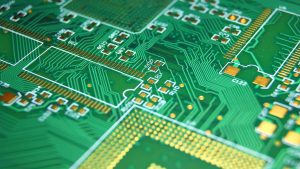
Electronic PCB – What Is It?
PCBs are also used in a number of security-related devices, such as cameras that record video footage or equipment that monitors security cameras. Similarly, fire detectors and smoke sensors are able to function with the help of PCBs. Finally, military equipment is often built with these electronic boards, which can include indicators that allow soldiers to monitor threats and operate their weapons.
The choice of a material for a PCB is critical to its functionality, as it will determine the performance benchmarks that can be achieved. Choosing the wrong material can have a significant impact on the final product’s overall quality and reliability. For instance, the thermal properties of a typical rigid PCB are usually poor due to its substrate materials that function as insulators first. To overcome this, designers can incorporate thermal channels to aid heat dissipation in the substrate material, or they can opt for a ceramic material with significantly better thermal properties.
In addition to a good thermal conductivity, a PCB must be durable enough to withstand the forces of gravity. For this reason, manufacturers need to choose a material that has a high strength-to-weight ratio. Additionally, the material should be able to withstand high temperatures and moisture levels.
Another important factor is how easy it is to identify the individual components on a circuit board. Most electronic components have specific markings on their bodies or packaging that represent their value and/or part number. For example, a resistor has bands of color that indicate its value, while capacitors have writing on their body that indicates the capacitance. In addition, most ICs, MOSFETs, and IGBTs have their part numbers written on them as well. This allows users to quickly locate the correct part for their projects.