
HDI Boards Enhance Wearable
As the digital world becomes increasingly complex, it’s imperative that hardware keeps pace. hdi board help manufacturers meet these demands by allowing them to fit more interconnections in a smaller space, thus enabling more powerful products. In addition, they have lower thermal loads, better signal integrity, and enhanced electrical performance.
What makes HDI PCBs so advanced? Among other things, they use state-of-the-art manufacturing techniques to reduce the number of layers and maximize performance. These include laser drilling and sequential lamination, as well as advanced imaging technologies. By combining these processes, manufacturers can produce thinner and smaller PCBs with greater reliability.
HDI board designs rely on the right mix of materials to achieve their performance goals. Core materials may be FR4, metal, or fiberglass; surface finishes can include ENIG, HASL, immersion tin, and gold. The design’s component selection is critical because it determines routing widths, locations, and the size of drilled holes and stack-up. The number of sequential laminations also influences cost. However, using fewer sequential layers can improve the performance of the design and save money on materials.
Increasing the number of layers also increases the complexity of a PCB. This can lead to more engineering hours and costly prototyping cycles. It can also increase the likelihood of defects and require stringent quality control measures to ensure consistency.
Another disadvantage is that the increased layer count can cause issues with signal integrity. The tighter spacing can lead to cross-talk, impedance discontinuities, and other problems. Thorough signal integrity analysis and simulations are key to avoiding these issues. The HDI technology also requires a higher level of skill and expertise from the manufacturer. These challenges have driven up the cost of HDI PCBs. However, they can be more cost-effective than traditional PCBs when used in the right applications.
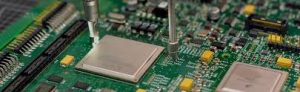
HDI Boards Enhance Wearable Technology
With the increased demand for wearable technology, HDI PCBs have become indispensable. Their small size and excellent electrical performance are essential for the development of wearable devices such as VR headsets and smart watches. They are also used in the automotive industry to create futuristic cars.
Moreover, the increased connectivity in HDI PCBs helps car manufacturers make lighter and more compact vehicles. This allows them to fit more electronics in a smaller space and enhance the driving experience.
With the advantages of HDI PCBs, they are gaining popularity in all segments of the electronic industry. This is because of the increased reliability and efficiency that these PCBs offer. With the increased use of wearable and automobile electronics, the demand for HDI PCBs will continue to rise.
So, the next time you purchase a new smartphone or car, consider getting an HDI PCB for enhanced performance and superior reliability. This way, you can stay ahead of the competition and keep your customers happy. Rowsum is a leading manufacturer of high-performance printed circuit boards and offers the latest in cutting-edge PCB technology. Contact us today to discuss your project with one of our experienced team members.