PCB Boards Are Used in Consumer Electronics
Consumer electronics such as TVs (LED and LCD screens), home audio systems, laptops, tablets, cellphones, electric toothbrushes, fitness trackers and more rely on well-designed PCB boards to operate. These circuits also need to withstand physical stresses, such as heat and moisture, while ensuring optimal functionality. Advanced design and assembly methods are essential to meet these demands.
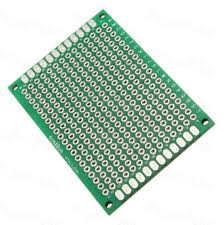
The basic structure of a pcb board begins with an insulating substrate, typically made from fibreglass but occasionally a dielectric material such as polyimide or FR-4 glass epoxy laminate. Copper is usually added to these layers to form the conductive traces that connect the components on the board. This is done using either a subtractive or additive process. In the subtractive process a reverse mask is applied to the substrate, exposing only those parts of it that will eventually become traces. Copper is then plated in the exposed areas, and the mask is removed. The resulting plated-through holes electrically connect the conductive traces.
A more efficient and accurate method is the additive process. A photoresist is coated on the substrate, which is then imaged with light projected in a pattern that matches the circuit diagram. This pattern is etched into the copper on the surface of the circuit board, forming the desired traces. The substrate is then cleaned and coated with a resist material to protect the exposed copper from dissolving in the etching solution.
How PCB Boards Are Used in Consumer Electronics
Once the traces are finished, the component holes are filled with solder. Through-hole components are inserted into the holes, while surface mount devices are placed on top of them. These are then soldered in place, firmly holding them and connecting them to the rest of the circuit board.
In addition to being durable, PCBs need to be efficient in terms of power usage and energy storage. Capacitors are a common type of energy storage device, which help to stabilize electronic signals. They can also act as a filter to block external interference, such as electromagnetic radiation from other electronic devices. In some cases, a capacitor can be used to increase the signal’s strength.
Transistors are another important element of a PCB. They are used to switch and control the flow of electronic signals within a circuit, and they can be used to boost or attenuate an electrical current. They are also essential in transferring electrical power between circuits.
Besides the components, a circuit board can include other materials and finishes that are useful in manufacturing, testing and servicing. The finished product may be coated with protective lacquer to prevent damage from chemical contaminants, dust and water. It may have a legend that contains information such as the circuit’s schematic and part numbers, a schematic diagram and a list of test procedures. It may also be printed with a unique serial number, an identification code, and other relevant data. This makes it easy to identify and repair a faulty unit. These features are especially important for medical devices, which often use PCBs.