
industries commonly use printed wiring assembly
Printed wiring assembly (PWA) has become ubiquitous across a multitude of industries, serving as the backbone of electronic devices and systems. From consumer electronics to industrial applications, PWAs play a crucial role in enabling the functionality and performance of various products and technologies.
One of the most prominent industries that heavily rely on PWAs is the consumer electronics sector. From smartphones and tablets to laptops and gaming consoles, consumer electronics manufacturers utilize PWAs to integrate complex circuitry into compact and lightweight devices. The versatility and scalability of PWAs allow for the seamless integration of components such as microprocessors, memory modules, and sensors, enabling the creation of innovative and feature-rich products.
The telecommunications industry is another major consumer of printed wiring assembly, leveraging them in the production of networking equipment, communication devices, and infrastructure components. PWAs enable the transmission and processing of high-speed data and voice signals, supporting the seamless operation of telecommunications networks and services. From routers and switches to base stations and optical transceivers, telecommunications equipment manufacturers rely on PWAs to deliver reliable and high-performance solutions.
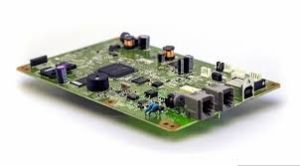
What industries commonly use printed wiring assembly?
The automotive industry has also embraced the use of PWAs in vehicle electronics and control systems. Modern automobiles are equipped with a wide array of electronic components and systems, including engine control units (ECUs), infotainment systems, and advanced driver-assistance systems (ADAS). PWAs play a critical role in integrating these components and facilitating communication between various vehicle systems, enhancing safety, efficiency, and comfort for drivers and passengers alike.
In the aerospace and defense sector, PWAs are integral to the design and manufacturing of avionics systems, navigation equipment, and mission-critical electronic assemblies. Aerospace and defense contractors rely on PWAs to meet stringent performance, reliability, and safety standards in harsh operating environments. The robustness and reliability of PWAs make them well-suited for aerospace applications, where failure is not an option.
The medical device industry also heavily relies on PWAs for the development of diagnostic equipment, imaging systems, and patient monitoring devices. PWAs enable the integration of sensors, processors, and communication interfaces into compact and portable medical devices, facilitating accurate diagnosis and treatment. The stringent regulatory requirements in the medical industry necessitate the use of reliable and high-quality PWAs to ensure patient safety and compliance with regulatory standards.
Additionally, the industrial automation and control sector utilizes PWAs in the production of programmable logic controllers (PLCs), industrial robots, and manufacturing equipment. PWAs enable the implementation of sophisticated control algorithms and communication protocols, allowing for the automation and optimization of industrial processes. From factory automation to process control, PWAs play a pivotal role in driving efficiency and productivity in industrial environments.
In conclusion, the use of printed wiring assembly is pervasive across a diverse range of industries, spanning consumer electronics, telecommunications, automotive, aerospace, medical devices, and industrial automation. The versatility, reliability, and performance of PWAs make them indispensable for integrating electronic components and systems into various products and technologies, driving innovation and advancement across multiple sectors. As technology continues to evolve, PWAs will remain a key enabler of electronic design and manufacturing, powering the devices and systems that shape our modern world.