
manual inspection of electronics assembly
In the intricate world of electronics assembly, where precision and accuracy are paramount, manual inspection techniques serve as essential tools for ensuring the quality and reliability of electronic products. While automated inspection systems offer efficiency and consistency, manual inspection remains a crucial component of the quality assurance process, providing human expertise and judgment to identify subtle defects and anomalies that may elude automated systems. Let’s explore the techniques used for manual inspection of electronics assembly and the critical role they play in maintaining product quality.
Visual inspection is one of the primary techniques used for manual inspection of electronics assembly, involving the careful examination of components, solder joints, and assembly features using magnification tools such as microscopes, magnifying lamps, or magnifying glasses. Inspectors scrutinize the surface of components and solder joints for defects such as misalignment, solder bridges, insufficient solder, solder balls, or other irregularities that may compromise the integrity or functionality of the assembly. Visual inspection requires keen attention to detail and extensive training to identify subtle defects and anomalies effectively.
Furthermore, tactile inspection techniques involve physically probing or manipulating components and solder joints to assess their mechanical integrity and adherence to specifications. This may include using tools such as tweezers, probes, or tactile gauges to check for proper component alignment, secure solder joints, or appropriate mechanical clearances. Tactile inspection provides inspectors with tactile feedback and allows them to assess the physical characteristics of components and assemblies, such as hardness, texture, or dimensional accuracy.
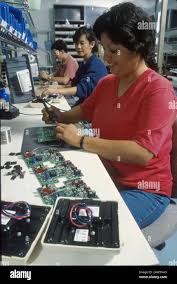
What techniques are used for manual inspection of electronics assembly?
In addition to visual and tactile inspection, electrical testing techniques are often employed during manual inspection to verify the electrical functionality and performance of electronic components and assemblies. This may include using multimeters, oscilloscopes, or signal generators to measure electrical parameters such as voltage, current, resistance, or waveform characteristics. Electrical testing helps confirm that components are properly connected, powered, and functioning within specified parameters, providing additional assurance of product quality and reliability.
Moreover, functional testing involves applying power or signals to the electronic assembly and observing its response to verify proper operation and functionality. This may include performing functional tests such as power-on self-tests (POST), functional checks, or performance verification procedures to ensure that the assembly meets the intended specifications and requirements. Functional testing helps identify issues such as faulty components, incorrect wiring, or programming errors that may affect the performance or functionality of the assembly.
Furthermore, environmental testing techniques may be employed during manual inspection to assess the robustness and reliability of electronic components and assemblies under various operating conditions. This may include subjecting assemblies to temperature cycling, humidity testing, vibration testing, or thermal shock testing to simulate real-world environmental stresses and evaluate their impact on performance and reliability. Environmental testing helps identify potential failure modes and weak points in the assembly, enabling manufacturers to design and produce more durable and reliable products.
In conclusion, manual inspection techniques play a vital role in the quality assurance process of electronics assembly, providing human expertise and judgment to complement automated inspection systems. Visual inspection, tactile inspection, electrical testing, functional testing, and environmental testing are among the techniques used to assess the quality, integrity, and reliability of electronic components and assemblies. By leveraging these techniques effectively, manufacturers can ensure that their products meet the highest standards of quality, performance, and reliability, thereby instilling confidence in customers and end-users.