
Techniques for Rigid Flex PCB Manufacture
Rigid Flex PCBs provide a flexible alternative to traditional rigid printed circuit boards. They are designed using computer-aided design (CAD) software and manufactured on state-of-the-art production equipment. During production, the flexible printed circuit board is subjected to rigorous quality inspections and testing. This includes environmental testing, functional testing and X-ray inspection. X-ray inspection is an effective way to examine the internal components of the PCB and detect defects. This method is also useful for inspecting the solder joints and BGA IC connections on the PCB.
X-ray inspection of PCBs involves the use of a special imaging system that produces X-rays that pass through the PCB and are detected by detectors. The detectors convert the X-rays into electrical signals that are processed by hardened processors to reconstruct and enhance images for defect detection. The resulting image can then be displayed on high-resolution monitors. The X-ray imaging process is capable of detecting defects that are not easily detected with optical inspection techniques such as open and shorts, misalignments and missing electrical components. It can also detect solder bridges, which are common errors in the assembly process.
There are several different types of X-ray inspection systems, which include 2D and 3D systems. Each type has a unique set of features that make them suitable for specific applications. Choosing the right system for your application will depend on the number of items to be inspected, the desired evaluation quality and the time available to complete the inspection procedure. The X-ray system you choose should be compatible with the PCB structure and size, as well as the underlying materials used for the inspection.
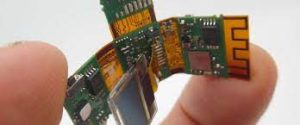
X-Ray Inspection Techniques for Rigid Flex PCB Manufacture
The most common X-ray inspection system for rigid flex pcb manufacturer includes an X-ray tube, which generates the X-rays. A control collimator is used to shape the beam, and sensor arrays capture the X-rays that penetrate the PCB. A display and hardened processors allow operators to review the X-ray images and identify defects. Some systems can be operated off line and are suitable for panel inspection, while others can be used on-line in place of the reflow oven during the manufacturing process.
Some of the most important factors in determining the quality of a PCB are the substrate and conductor material. The substrate is the base layer that carries all the other layers and components of the circuit board. Typical substrate materials include polyimide and polyester. The conductor is a copper layer that creates the electrical pathways on the PCB. X-ray inspection can detect copper corrosion and other defects in the conductor that may affect performance.
X-ray inspection is an essential tool in the production of rigid flex pcb, and it can be used to detect a wide range of defects. These include solder bridges, which occur when the solder joints are too close or develop a link where there should not be one. It can also detect inadequate pin-hole fill for through-hole connectors. In addition, it can identify defective or misaligned components and other hidden flaws in a PCB.